Before beginning this horrendously long review/analysis, I would like to warn you, dear reader, that many spoilers lay ahead. If you have not read or watched Harry Potter and the Cursed Child or if you have future plans to partake in either of those aforementioned activities, please do not read this review. I do not want to be the person to spoil the ending of Harry’s story. You have been warned.
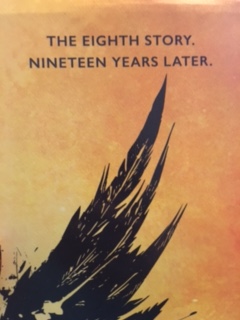
On August 2, 2016 at approximately 4:15pm, I picked up my copy of Harry Potter and the Cursed Child from the post office. I’d been thinking about it all day at work. My excitement came to a peak as I ripped apart the flimsy cardboard box and pulled out the golden book with the same excitement a Seeker may grasp the Golden Snitch. Printed in black on the back of the book were the words, “THE EIGHTH STORY. NINETEEN YEARS LATER”. I felt every feeling I’d repressed all day; excitement, anxiety, nostalgia, all rise up in my stomach. I rushed home and instantly I was apparated back to Platform 9 3/4 at King’s Cross Station.
BACKGROUND
Harry Potter and the Cursed Child was written by J.K. Rowling, the author of the previous seven Harry Potter novels. She wrote the script in collaboration with Jack Thorne and J0hn Tiffany. Jack Thorne is an experienced script writer, whose credits include Hope, Don’t Take My Baby, and This is England. John Tiffany is an award-winning director on the West End and Broadway.
Unlike the previous series of novels, Harry Potter and the Cursed Child is in the format of the West End play that opened July 31st, 2016, the same day the script was released for purchase.
PLOT
Overview:
Before I begin my analysis of the plot, I would like to comment on the format. Harry Potter and the Cursed Child is a script while all previous Harry Potter stories have been novels. Scripts are compiled almost exclusively of dialogue, limiting the author on the amount of detail they can provide. Therefore, if this script was adapted into a novel, I believe most plot issues would be resolved, as a novel would provide more detail and world-building than any script ever could.
As I dived back into the Wizarding World, I was surprised to see Albus’ and Scorpius’ first 3 years at Hogwarts fly by before my eyes. While it certainly could’ve been my reading speed, I felt this was rushed. I expected the story to take place during Albus’ first year. Instead, the first three years were used as a sort of Exposition to set up the rest of the story. For example, in his first year we find out that Albus is sorted into Slytherin. Throughout his next three years, he develops a friendship with Scorpius Malfoy and on the first day of their fourth year of Hogwarts, they jump from the top of the train, pursued by the Candy Trolley Witch, thus setting off the rest of the plot.
While the information from this Exposition was needed, I don’t believe the Exposition itself, necessarily was. All of that could’ve easily been presented while on the Hogwarts train the first day of Fourth year, thus, starting the story from Amos Diggory’s visit to Harry.
However, I understand why this Exposition was included. It was nostalgic. The play begins exactly where Harry Potter and the Deathly Hallows leaves off. And for that reason only, I am glad that this glimpse into Albus Potter’s first three years at Hogwarts was provided.
With that said, the overall plot structure of Cursed Child is nearly perfect (save for the holes we will talk about later). If I was teaching a class on the structure of a plot, I would use Cursed Child as a perfect example of the perfect structure. There is a clear Exposition, Rising Action, Climax, so on and so forth. This does allow for rather comical scenes during the Rising Action and a shocking twist at the Climax.
Delphi’s Plot:
Delphi, a new character to the Harry Potter universe, is a seemingly bubbly and absent-minded twenty-something that helps Albus and Scorpius on their mission to save Cedric Diggory during Harry’s fourth year. Under the guise as Delphi Diggory, Cedric’s cousin, she successfully manipulates everyone (even the reader) into believing she is harmless. When, in fact, she is the daughter of the Dark Lord and his most loyal general, Bellatrix Lestrange. Due to the sudden revelation of her parentage, Delphi successfully carries a subplot worth talking about.
First let’s talk about why I liked Delphi’s plot. It was completely unexpected, at least to me. Looking back, I feel quite stupid. She just happens to have Polyjuice Potion prepared when they need it, she was “sickly” as a child and raised by a woman (who just so happens to have Death Eater connections) which she uses as her excuse for not attending Hogwarts. Despite this, Delphi’s bubbly persona completely threw me off and I instantly liked her, although found her quite strange (much like when we were first introduced to Luna). Once I discovered she was “The Augurey”, I had to put down the book for a few seconds to think about what I had just read. The seemingly sweetest and most genuine character in the entire book (sans Scorpius) had turned evil in just a few short lines. The reader discovers it as Albus and Scorpius do, and just before the Golden Trio and Draco. Thus, begins the descent of the plot. This sudden change in tone and character was done both jarringly and fluidly at the same time. Jarringly, because, if you like me, didn’t see Delphi’s change coming, it hit you like a bus. Fluidly, because once Delphi’s true nature and intentions are revealed, I found myself turning page after page, immediately hoping for her demise. The climax was done beautifully.
Now why I didn’t like Delphi’s plot. It seemed too obvious. After Harry Potter and the Deathly Hallows, countless people theorized that Voldemort had had children. Some even write fanfiction on that very subject. It felt slightly like a cop out. I wanted the new book to explore a post-war Hogwarts and Wizarding World. I wanted to see blood prejudice begin to disintegrate. I wanted the next generation to team up and defeat a new evil, one only trivially related to Voldemort and his Death Eaters. While Cursed Child, delivered some of my wishes, it fell short on others. Delphi seemed too obvious to be true.
Plot Holes:
There are a few plot holes in Harry Potter and the Cursed Child. Most of which surrounded Delphi. The one which relates most to me is: What happened to Delphi after the end of the battle? If you Google it, it says she went to Azkaban. Hermione also mentions that she will go to Azkaban, but the last we hear of Delphi she has been gagged and levitated away by Draco. Nothing is ever confirmed. While this isn’t necessarily a plot hole, it left me, and a few of my friends, slightly confused as to Delphi’s fate.
Once Delphi’s true parentage was revealed, I began to wonder, does that line up with the canon timeline? The answer is: kind of, but not really. Delphi was born before the Battle of Hogwarts in Malfoy Manor (apparently unbeknownst to Draco himself who knew nothing of Delphi’s existence). According to the Harry Potter Wikia, Delphi was born sometime before March in 1998. With this timeline, many fans have inquired as to how the pregnancy was kept a secret and how Bellatrix recovered so quickly to fight in the capacity she did. So yes, technically it is possible that Delphi was born before the Battle of Hogwarts, but it seems unlikely Bellatrix would have been able to keep the pregnancy a secret and fought so brutally in the war. While there is no mention of who knew of Delphi’s existence (except for Rudolphus Lestrange, Bellatrix’s husband), I wonder how/why it was kept a secret from Draco and possibly his family. Delphi was born in his house and is technically his cousin. Draco would’ve been at Hogwarts at the time, but he was considered a fairly loyal, although cowardly, follower of Voldemort. There is also no mention of if either of Draco’s parents knew. It seems extremely unlikely to me that Narcissa, Draco’s mother and Bellatrix’s sister, did not know of her sister’s pregnancy.
Many of these questions may still be answered and, like I said at the beginning, if the script were adapted into a novel, I believe many of these questions/ inconsistencies would be explained or solved.
CHARACTERS
Newbies:
Albus Potter: The very first indication that Albus is different from his parents is that he is sorted into Slytherin. Both of his parents and his older brother James (and later his little sister Lily) are all Gryffindors. As the Exposition continues, we see that Albus, unlike James, doesn’t like the fame that comes with being Harry Potter’s son. The staring on family outings, the instant recognition, the expectations… Albus doesn’t like Quidditch, is bullied, prefers to keep a low profile. All of which is the opposite of his father (although in Harry’s defense, it was impossible for him to keep a low profile).
As Rose and Albus enter the train together, Rose says, “We need to concentrate…[Albus: Concentrate on what?] On who we choose to be friends with. My mum and dad met your dad on their first Hogwarts Express, you know…”(p. 14). The first person the two meet is Scorpius Malfoy, who becomes Albus’ best friend and towards the end of the book, a love interest of Rose (more on this later). The friendship is unconventional because Harry and Draco were sworn enemies during their time at Hogwarts. While Harry is surprisingly supportive of his son’s friendship at first, there is no doubt that it strains their relationship.
Albus tells his father that he doesn’t want to be his son the night before he leaves for his fourth year at Hogwarts. Harry had given Albus his pre-school gift of Harry’s own baby blanket. While Harry most likely saw this as a thoughtful gift, Albus was jealous of his brother James receiving the Invisibility Cloak and Lily receiving a pair of magical fairy wings. Harry understands his two other children perfectly, as they are almost carbon copies of himself and Ginny. Albus is different.
Harry and Albus’ strained relationship provides a wonderful character arc that is absolutely beautiful to watch unfold. Albus starts off resenting his father for his fame and later for his harsh treatment of Amos Diggory, to hating him for keeping him and Scorpius apart, and finally, in the end, realizing that he and his father are more alike than he believed. I think one of the most beautiful parts of the entire story and specifically of this character arc is when Albus uses the blanket to communicate through time that he and Scorpius are in trouble. Albus’s cunning defacing of his father’s blanket ultimately led to Delphi’s downfall.
Scorpius Malfoy: Whenever I imagined the future son of Draco Malfoy, I pictured a snarky and witty teenager with a shock of white-blond hair, lacking the blood prejudices, but retaining the same arrogance of his father. Instead, we received a Scorpius Malfoy who is lonely, sweet, genuine, and makes bad puns. I’m just to come out and say it: Scorpius was my favorite character of the entire script and possibly one of my favorite of the universe.
Scorpius certainly does lack the blood prejudices the majority of his family shared, something it seems that Draco and his wife, Astoria, ensured. Rumors surfaced soon after Scorpius’ birth that Draco and Astoria had trouble conceiving a child, and with the help of a contraband time turner, is the son of Voldemort. This is certainly foreshadowing that a child of Voldemort exists, but it’s not Scorpius, but instead his cousin, Delphi. And as it turns out, Draco actually does have a contraband time turner.
The truth is that Astoria was sickly and Draco was willing to let his family line die out in lieu of keeping his wife alive and healthy. However, Astoria wanted to have a child, despite the obligation they both felt coming from Pureblood families. They had Scorpius purely for themselves and there is something beautiful about that. I also believe this shows immense evolution in Draco’s character (much more on this later).
Scorpius is completely different from his father. Scorpius is much more caring and much less arrogant. However, he shares his father’s ambition and love of a challenge. They are both Slytherins after all. Due to the rumors surrounding his birth, Scorpius was raised in relative isolation, leading to his slightly odd, and shy demeanor.
The summer during Scorpius’ second and third years at Hogwarts, his mother Astoria, dies. This obviously extremely hard for Scorpius to handle. He confides in Albus and invites him to the funeral. This strengthens the two boys’ relationship and ultimately leads to their immense trust of one another.
In a conversation with Harry, Draco says, “I can’t talk to him either. Scorpius. Especially since–Astoria has gone. I can’t even talk about how losing her has affected him. As hard as I try, I can’t reach him. You can’t talk to Albus. I can’t talk to Scorpius. That’s what this is all about. Not about my son being evil. Because as much as you might take the word of a haughty centaur, you know the power of friendship” (p. 135). Draco and Scorpius have a similar father/son relationship as Harry and Albus do. It is strained, especially after Astoria’s death, and they have a similar arc, although it isn’t as readily resolved as Albus and Harry’s.
In an alternate reality the two boys accidentally created, Albus was never born and Scorpius is on his own to go back and fix their mistakes to set time back again. He seeks out the help of Snape (who is still alive in this reality where Voldemort won the war), and rebel Ron and Hermione. Scorpius’ time by himself in this alternate reality shows that he is not the “best friend” character or a “sidekick”. Scorpius is a hero in his right.
Scorpius instantly takes to Rose. She is relentlessly rude to him, yet, he is still taken with her and by the end of play, is convinced that he can win her over. While this is quite inconsequential, I do think we should talk about the curious shipping of Scorpius Malfoy. The Scorpius/Rose ship existed before Cursed Child was even a thought, and it certainly affirms the ship, making it canon. However, another ship, possibly a stronger one has risen out of Cursed Child. The Albus/Scorpius ship has begun to gain ground. Honestly, I can see why. Scorpius is jealous when Delphi flirts with Albus and there were many conversations that seemed a little too friendly. There were a few times I was waiting for them to make out.
I do think the ship wasn’t intentional by the writers, I think they were trying to shatter the stereotype that men can’t have the same close, personal relationships that many female best friends have. Ones where they can openly hug, seek each other out for comfort, and become jealous when they see someone becoming close with them. But, I’m not going to be one to burn holes in ships, by all means, ship away!
Rose Granger-Weasley: Rose Granger-Weasley, unlike Scorpius, is exactly what I expected. She has the tenacity, spunk, and hotheadedness of her father; and the intelligence and wit of her mother. She immediately dislikes Scorpius due to his parentage and the rumor that he is Voldemort’s son. However, towards the end, Scorpius asks her out. She says no, but this simple action begins to “wear” Rose down and she is starting to show some pity towards Scorpius.
I wish Rose would’ve played a bigger role. She was there in the very beginning and very end, but the middle lacked Rose (except for in the play where the actress who plays Rose also plays a young Hermione). I hoped Rose would see them sneaking off the train, immediately chastise them (much like Hermione would’ve done), and then ultimately decided to come along for whatever reason, whether it be to protect her cousin or for her own curiosity. I certainly hope that in the future we can see more of Rose.
Delphini: While I have already quite extensively discussed Delphi, I never got a chance to talk about her actual character. Delphi, it seems, was also raised in isolation. Mostly to protect her identity and to protect her from harm, to allow the Dark Lord to re-manifest in her. Despite this isolation, she is an extremely talented witch, using the Imperio Curse to successfully control Amos Diggory and the staff/residents of St. Oswald’s Home for Old Witches and Wizards. Delphi is in her early twenties, but is able to handle herself well in a duel against Harry Potter. Despite her talent, her loyalty to her father and his cause, is her downfall. Harry, disguised as Voldemort, successfully leads her into a trap.
In the alternate reality where Voldemort won the war, Delphi is known as “The Augurey”. The Augurey is a magical creature that is often called “The Irish Phoenix” because of it’s ability to foretell death (like the Irish legend of the banshee). It is a large greenish-black bird which along with foretelling death can also predict bad fortune, like the the one Delphi’s guardian kept predicted about her.
Taking the symbolism literally, it is quite obvious to see that if Voldemort were never defeated or if Delphi’s plans had come to fruition, Delphi would have brought death to the Wizarding World and beyond. However, Delphi’s symbolism as an Augurey does bring death to Harry as it causes him to watch his parent’s deaths, knowing he can do nothing about them without creating repercussions for the entire world.
Part of me felt a bit sorry for Delphi. Her driving forces were quite innocent. She was simply a lost and lonely girl who wanted to meet her legendary father. I don’t believe this excuses her actions, but being thrown into Azkaban for the rest of your life when all you wanted was to see your father seems a bit harsh.
Oldies:
Harry Potter: Between the end of the Second Wizarding War and the beginning of Cursed Child, Harry is definitely one of the characters that changed the least. He went on to become an Auror, marry Ginny, and have three children. As an Auror, he is still forced to make hard decisions like the one of telling Amos Diggory he could not go back in time to save his son. Harry kept all of the main traits that made him Harry Potter. He is still ridiculously prideful. His pride is one of the many differences between Albus and Harry that cause their relationship to strain.
Harry and Albus’ relationship is one of the main focuses of the script. Their progression of discovering themselves (in Albus’s case) or discovering a new part of themselves (like Harry) and discovering each other. Harry realizes that being Harry Potter’s son is not always easy, especially when sorted into Slytherin. I believe that Harry realizes that Albus is much like the Slytherin side of himself (much like how Albus discovers his father is the Gryffindor side of himself).
Another interesting relationship is the one between Harry and Draco. While mortal enemies in school, the two seemed to start to understand each other slightly by the end of Deathly Hallows, or at least Harry realized that Draco wasn’t completely bad and Draco started to become more tolerant. In Cursed Child, it seems much the same. They tolerate each other, but don’t interact more than they are forced to. And to my surprise, they are actually supportive of their sons being friends. While I expected Harry to accept it (albeit not immediately), I thought Draco would be much more hesitant to allow his son to be friends with Albus.
Once their sons go missing together, however, Harry and Draco have a harder time getting along. I think this mostly has to do with the fact Draco is also angry that Harry will not refute the rumors that Scorpius is Voldemort’s son (although it seemed like Harry actually believed it could be a possibility). The pair are also forced to spend more time together and even without the added drama, they don’t get along too well.
I can’t talk about Harry and Draco and not talk about one of my favorite scenes of the entire script. The duel between Harry and Draco. It takes place after Harry forbids Albus from seeing Scorpius, believing Scorpius is evil, even going as far as threatening McGonagall to keep the two boys apart. Draco shows up at Harry’s door to confront him which turns into a duel after Harry suggests Scorpius is not Draco’s son. The duel is fast-paced and filled with just as many insults as curses. The duel ends after Ginny walks back in to see both men with wands drawn and chairs floating midair (something I would kill to see on the actual stage). However, in the middle of the duel, it seems as if the two men are enjoying the fight more than actually fighting. Afterwards, the two calm down quickly and realize that they have the same problem (not being able to talk to their sons). We also learn that Harry does most of the cooking, a fact which seems quite obvious once you remember he lived with the Dursley’s and cooked there, but a fun fact nonetheless.
The last thing I want to discuss about Harry is the final fight and the final scene of the play. In the final fight, Harry is transfigured to look like Voldemort, a job he bravely volunteered for, and lures Delphi into the church. This isn’t far from the Harry Potter we know elsewhere, but I imagine taking the form of the person who tried to kill you and did kill your parents, is an emotional toll. However, I feel like the most important point for Harry’s character is having to watch his parent’s deaths. The final battle takes place in 1981 in Godric’s Hollow, where and when his parents were killed.
We hear Voldemort telling Lily to stand aside, Lily refusing, and then the green flash of light which kills Lily Potter. The scene is intense and emotional. I sat in shock as I read it. I felt sad, disgusted, and remorse. To make readers mourn characters that were dead from the time they discovered the universe is both heartbreaking and beautiful at the same time.
While watching his parents’ murders, Harry has to be physically and emotionally supported by his friends and family who opted to watch as well. Harry could’ve changed time. He could’ve stopped the murders, but knowing that the consequences could be too great, he doesn’t. This choice prompted Draco to comment, “That’s heroic.”
Draco Malfoy called Harry Potter a hero. I’ll leave it at that.
Ron Weasley: Ron Weasley is exactly the same Ron we saw at the end of Deathly Hallows with a few minor changes. Ron now runs Weasley’s Wizarding Wheezes, something he seems perfectly content with. I think Ron’s most defining characteristic in Cursed Child is his undeniable love for Hermione. He is relentlessly supportive and as we see in the alternate universe, willing to fight and die for her.
Ron serves the same purpose he did in some of the novels. As comic relief. Whenever a scene was particularly tense, Ron would make a funny comment and suddenly the entire tone changed. It was almost refreshing to see Ron nearly completely unchanged. He provided a sense of familiarity and charm to otherwise heavy scenes and topics.
Hermione Granger-Weasley: Hermione is one of the Harry Potter characters I relate to most. She was a know-it-all (who actually knew-it-all), bookish, and not exactly the most popular witch at Hogwarts. She had bushy hair and was most likely seen in the library. She solved the secret of the chamber (or at least part of it) before anyone else. Hermione Granger was probably the most badass character in the books. She knows how to hex you into next week and outsmart you; all without uttering word. Why am I mentioning all of this? Because all of Hermione’s hours at the library and hard work paid off and she is now THE MINISTER FOR MAGIC!
When I learned that Hermione Granger had become the Minister for Magic, I felt my heart grow a thousand sizes. She was often underappreciated and bullied at Hogwarts, not to mention, tortured and threatened during the war. If anyone deserves to be Minister for Magic, its Hermione Granger.
In my notes, I was going to talk about the significance of a Muggle-born as the Minister for Magic, however, upon doing some further research, I learned that Hermione is not the first. According to Pottermore, Nobby Leach was the first Muggle-born Minister for Magic and rumor has it; Draco’s grandfather, Abraxas Malfoy, was part of the plot that ousted him. Despite that, having a Muggle-born stay in office and seeing that Draco isn’t trying to oust Hermione (although he does heckle her and make her job a lot harder), is important and we will talk more about their interactions later.
Hermione, upon marrying Ron, presumably chose to hyphenate her maiden and married names. This isn’t really a surprise to me, given Hermione’s independent personality. However, I couldn’t help but smile when I saw it. She kept her Muggle name and added on the new Pureblood Magical last name. It seemed poetic to me. She was recognizing her heritage, but also, her place and right to be in the Magical community. Instead of taking “the sacred Twenty-eight” Pureblood last name of “Weasley” she decided to create her own, morphing her muggle name with the Pureblood name and I don’t think anything is or should be more symbolic of the end of the Second Wizarding War.
Now on to the importance of Hermione keeping the Time Turner. When an illegal Time Turner was recovered from Theodore Nott, Hermione chooses to keep it, fearing another one exists. This simple action allows Albus, Scorpius, and Delphini to travel back in time (only after stealing the Time Turner, of course) and causes McGonagall to harshly chastise her. However, Hermione was correct to assume that another Time Turner was in existence. None other than Draco Malfoy himself, possessed one and a fully functional one, unlike the one Hermione had kept. Draco’s Time Turner allowed them to travel back in time to save their children and defeat Delphi.
This next tidbit of analysis is just my own speculation and has no other evidence within the script. It is simply my own theory and I cannot speak to whether this is true or not. I just think it is interesting and if true, would bring new depth to Hermione’s character. Towards the beginning of the script, Harry joins Hermione in his office (after confiscating the Time Turner) to discuss the aforementioned object. Hermione pulls out a toffee (or a piece of chocolate). Harry mentions she could get addicted and Hermione makes a quip about her parents being dentists and her bound to rebel at some point. While this is sound and a logical explanation on its own, I wonder if this is alluding to Hermione having depression. As we know chocolate is often used as a cure for the aftermath of a dementor attack/ encounter. Dementors are an obvious metaphor for depression and mental illness. Like I said, this is far-fetched and basically just a conspiracy theory, but I thought it was worth including because it would certainly give some incite into Hermione’s character and the stress she endures as Minister for Magic.
Regardless, Hermione remains as intelligent, competent, and badass as ever.
Draco Malfoy: Out of all of the returning characters, Draco Malfoy has changed the most. While he remains abrasive, confrontational, and shrewd; he has matured. Draco’s first appearances in the script are all negative. He disagrees with the trio, or he doesn’t accept well wishes when his wife, Astoria dies, and instead demands that Harry refute the rumors that Scorpius is Voldemort’s son.
As the script continues, however, we see many different sides of a Draco. A polite and respectful side when he Floos to Hogwarts and dirties McGonagall’s office, or after his and Harry’s duel when the kitchen is a mess. A protective side when he isolates his son from the Wizarding World to protect him from the rumors, when he confronts Harry about keep Albus and Scorpius apart, and when Draco is willing to do anything to get his son back.
While the affects of Astoria’s death are more acutely seen in Scorpius, Draco is also obviously affected by his wife’s death. Her death causes Draco to become even more protective of Scorpius. He doesn’t want to lose him too. It is obvious from the true circumstances of Scorpius’ birth that Draco did deeply care for his wife. He was willing to let the Malfoy name die with him. Something, that when he was in school/ a Death Eater would’ve terrified him, and something his father wouldn’t have considered an option. It is also mentioned that Draco married Astoria because of her more tolerant views.
After her death, Draco respected Astoria’s wishes and didn’t use the Time Turner to see her. Something I find completely heartbreaking and proves that Draco has the ability to love, just as deeply as he does to hate.
Along with Harry, Draco deeply cares for and loves his son, but is unable to effectively express it. The novel follows Draco and Scorpius’ mutual discoveries of themselves and each other just as much as it does Harry and Albus’. Although, Draco and Scorpius’ relationship is much more strained than Harry and Albus’, I believe at the end, they come out with a better understanding for each other, although it is not as well explored.
Draco, however, outright surprised me towards the end of the script. In a Ministry meeting, people begin to barrage Hermione with criticism in regards to how she handled the Time Turner and the situation with Albus, Scorpius, and Delphi. While Harry and Ginny (and later Ron), immediately step up to defend their old friend, Draco, also places blame on himself and steps up to stand with the Golden Trio. This simple action juxtaposes almost all of his actions in the actual Harry Potter series that happened nearly twenty years before. In that twenty years, Draco has obviously changed and his worldview challenged and morphed. His continuous evolution as a character is fascinating to me.
One of the most heartbreaking points of the book takes place after the duel between Draco and Harry. Draco says, “My father thought he was protecting me. Most of the time, I think you have to make a choice–at a certain point–of the man you want to be. And I tell you that at that time you need a parent or friend. And if you’ve learnt to hate your parent by then and you have no friends…then you’re all alone. And being alone–that’s so hard. I was alone. And it sent me to a truly dark place. For a long time, Tom Riddle was also a lonely child. You may not understand that, Harry, but I do–and I think Ginny does too” (p.136).
My heart broke when I read that passage. While I’d always felt a baseline sympathy for Draco (probably more than most people), this passage brought me to tears. To think that Draco felt so alone that he thought Voldemort was his only chance to find his place in the world is truly tragic. I don’t think this necessarily excuses all of Draco’s behavior, it does certainly make his character, choices, and actions a lot more complicated.
His name “Malfoy” itself means “bad faith” (Harry Potter Wikia), something which all of his previous ancestors and himself in the earlier books had exemplified. While Draco once lived up to his name, I believe he is slowly distancing himself from it, partly through Scorpius.
Draco lies in a gray area which is hard to move out of. On one hand, he did relentlessly bully the trio when they were children, is not above intimidation or blackmail, followed Voldemort, and did at one time believe in Pureblood supremacy. Yet, Draco deeply cares for his family, became more tolerant, is polite and respectful in most situations (with the exception of interactions concerning Scorpius’s parentage and Scorpius in general), and insisted on raising his son without the same blood prejudices he was raised.
I like how Cursed Child explored the gray area Draco inhabits in a deeper manner. He ends up just as much a hero as Harry, Ron, and Hermione (and all of their collective children).
Now for the fun parts. There is, curiously, no mention of Draco’s Dark Mark. Either it disappeared after Voldemort’s death, although the previous Death Eaters from the First Wizarding War’s Dark Marks did not (they simply turned red and faded slightly), or Draco somehow removed it, or he simply keeps it well covered. Whatever the explanation is, I wish we would’ve gotten it. I think it would’ve been a nice metaphor to go with Draco’s newfound tolerance.
Draco’s interactions with Hermione are also particularly entertaining. He seems to mostly respect Hermione’s position as Minister for Magic, although he doesn’t hesitate to accuse her of less than complimentary ways of securing the position, he, unlike his grandfather is not seeking her removal. Just before Delphi’s battle, Draco says something along the line of that he can’t believe he is being bossed around by Hermione Granger. Something he seemed to be saying mostly to himself, yet, Hermione heard. She turns around to which Draco promptly adds that he was enjoying it. When I read this, it immediately seemed like flirting to me (something quite bold of Draco considering Ron was in the room), however, I’m not sure it was meant that way. Regardless, it was a funny line and shows that Draco respects her in an odd sort of way.
In the alternate universe, we see a glimpse at the wicked side of Draco Malfoy. In a world where Voldemort was victorious, Draco Malfoy is the Head of Magical Law Enforcement. He is still the same Draco, except, he never overcame the conflicted feelings of his adolescence. While he still hasn’t directly killed anyone or is directly responsible for any of the atrocities happening in the alternate world, he still used his money and power to keep from stopping it. Although, much like when he was younger and refused to identify Harry, Ron, and Hermione at the Manor, he feels conflicted with these actions and will help those on the other side, like when he gives his son permission to do whatever he wants, albeit safely.
One of Draco’s lines stuck with me, “She made being brave very easy, your mother” (p.173).
Draco Malfoy, despite your sympathies, or lack there of, is somewhat redeemed in Cursed Child.
THE BLANKET TRICK
I’ve already mentioned almost everything about the ending that’s important above. However, something I haven’t discussed in detail is the trick Albus and Scorpius used to alert Harry to their whereabouts and dire situation.
Before Albus’ fourth year at Hogwarts, Harry gives him his own (Harry’s) baby blanket. Albus left it in his room at home and knowing a love potion containing pearl dust had been spilled on the blanket. Using a clashing ingredient, they wrote on the blanket, knowing Harry would probably find it. And Albus was right, Harry did find it. The call for help would become evident once the potion was spilled on it. It was a cunning plan and one, I’m not sure Harry Potter himself could’ve come up with. It shows the differences between Harry and Albus, but also the similarities in their confidence and determination (something Moaning Myrtle also points out).
DUMBLEDORE
Obviously by this point in the story, Albus Dumbledore has been dead for around twenty years. However, his impact on the Golden Trio, particularly Harry, is still recognized and felt deeply in this story.
Harry named Albus Potter after Albus Dumbledore. Most fans know this and understand why he would name his child after his headmaster and mentor.
Whenever Harry is visiting Hogwarts or in the Headmaster’s Office, it seems he stops and talks to a portrait of Dumbledore, who still offers him advice and guidance from beyond the grave. I find these short interactions between the two, reinforced Harry’s character and was a nice bridge between the novels and the script.
Harry keeps a portrait of Dumbledore in his office and towards the end of the story, he seeks out his old headmaster for advice. The specifics of the conversation aren’t too important, but what is important, is what they said towards the end. The two exchanged “I love yous”, although not with that particular wording. I think this is extremely important as Dumbledore was an important father figure to Harry (and obviously continues to be through his portrait). They never exchanged the same sentiment in the books (at least not verbally) and I think that looking back it shows the bias Dumbledore had and the blind faith had in Dumbledore. Both Harry and Dumbledore were blinded by love for each other.
OPINION
I think it is quite obvious by now that I loved the play. I will admit it has its faults and many criticisms are warranted. I do believe that the script format was the not the best way to release this story. I would have rather waited another year to receive a novel version of this story. I think a novel version would have solved many of the problems with the script. The novel would allow for more world-building, a deeper insight into the plot, and possibly a little more explanation into the alternate universes and exactly how they came about.
I also believe that nothing would beat seeing the play for itself. I can imagine the story, however, I want, but the play is also going to fill in many gaps the script has. After reading the script, I would give practically anything to actually see the play performed.
I do believe that while the play has many warranted criticisms; the play triumphs in character development and arc. The story is definitely character driven and seeing the Trio all grown up and their affect on their children is beautiful.
The structure of this script reminds me heavily of The Empty Hearse, although not the Sir Arthur Conan Doyle version, but the contemporary TV version from BBC’s Sherlock. It seems as if the script draws heavily from fan theories and fan fiction, something that many people see as a negative, and to some fans means that this story essentially is fan fiction and not canon.
So I guess the question is: do I think The Cursed Child is canon? And the easy answer is: yes. The fact that J.K. Rowling’s name appears on the cover of the novel in the largest print; affords it the right to be canon. However, I do believe this is something that an individual can decide for themselves.
Harry Potter and the Cursed Child was a wonderful way back into the Wizarding World. When I closed the book, I found myself once again feeling sad as I left Harry Potter behind. But that’s what beautiful about fiction and about the Wizarding World, you don’t have to leave it behind. All it takes is to crack open the pages once again and read “Mr. and Mrs. Dursley, of number four, Privet Drive, were proud to say that they were perfectly normal, thank you very much…” (Harry Potter and the Philospher’s (or Sorcerer’s) Stone, p. 1).
-Alyce McKnight
Find Alyce: Facebook Figment Twiter
 Alisan Keesee